

Deep ’n Blue Subotica · Education · Technical configuration
Two cylinders, manifold, isolator, bands and redundant regulators.
What is it and what is it used for?
A twinset comprises two back-mounted cylinders mechanically joined by bands. In a manifold configuration, the cylinders are connected by valves and an isolator; the exact arrangement depends on the system type.
Its capabilities and procedures differ from those of two completely independent cylinders. Isolation and dealing with valve problems require specific training.
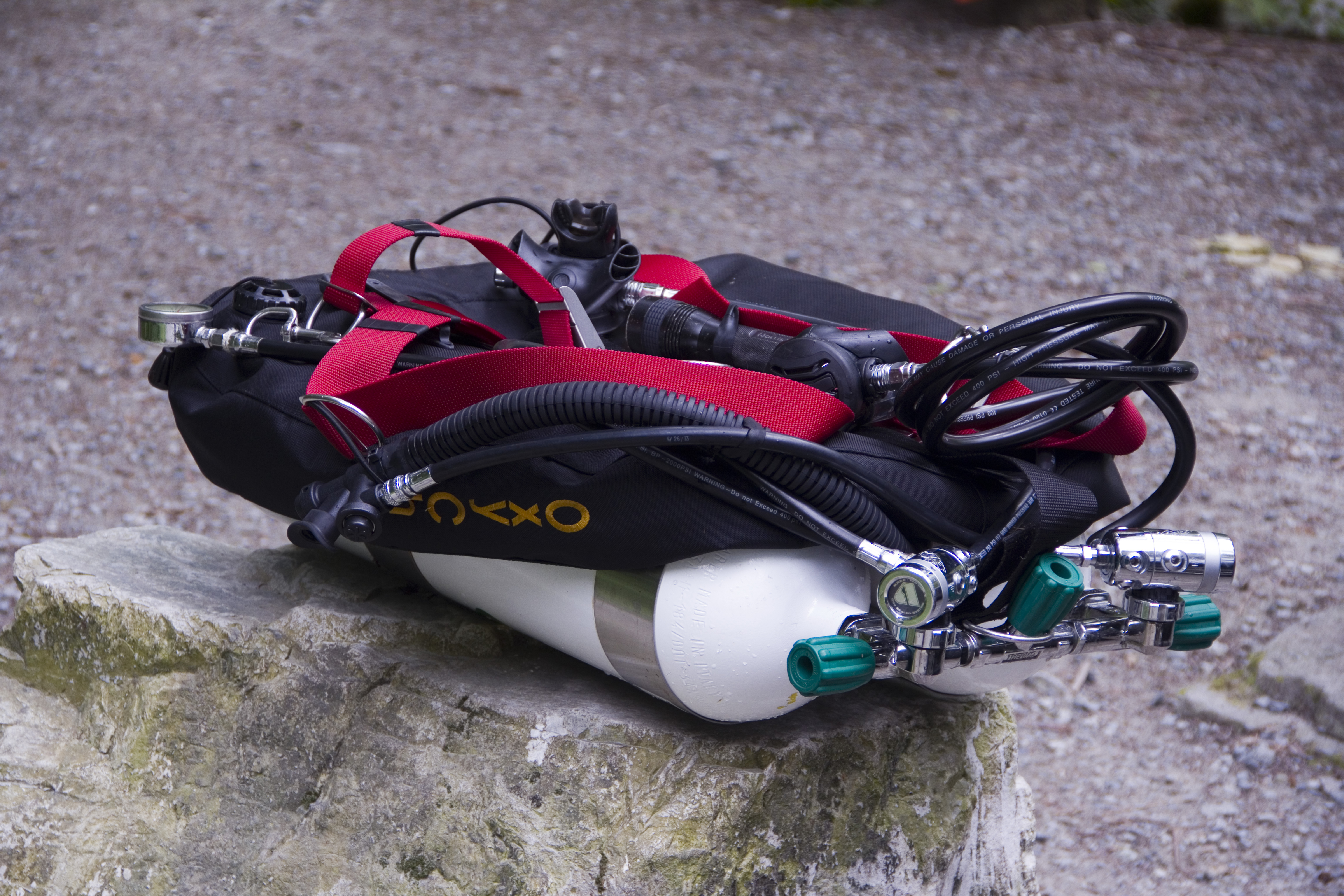
Components and basic concepts
- Left and right cylinders – selected capacity and gas.
- Manifold – connects the valves if provided for in the design.
- Isolator – in certain systems, interrupts communication between the two sides.
- Bands – hold the cylinders in the correct geometry.
- Two regulators and measuring equipment – according to the plan and training.
How does it work?
- Gas from both interconnected sides may be available depending on the position of the valves and isolator.
- Closing the relevant valves changes which gas sources remain available.
- The mechanical weight distribution and wing affect trim.
Selection and proper use
- Use compatible cylinders, valves, bands and regulators.
- Analyse gas reserves, failure procedures and exit separately.
- Practise valve handling in a dry run, then in a pool, and only afterwards in an actual dive profile in accordance with your training.
Pre-dive check
- Check pressures, the positions of all valves and mechanical connections.
- Visually inspect the manifold and the security of the bands.
- Confirm the sequence of actions in the event of a failure with your buddy.
Common mistakes
- Assuming that every valve closure always preserves the same gas supply.
- An unpractised valve drill at a demanding depth.
- An incorrect balance between weight and wing lift.
Maintenance and storage
- Manifold disassembly and valve servicing must be carried out by a qualified professional.
- Periodically inspect attachments and bands.
- Protect valves from impacts during transport.
Instructor’s note: Valve drills and isolation are high-risk procedures when performed incorrectly. Do not use them without practical technical training.
Further reading
For pre-dive checks and maintenance, see DAN – Gear Care Guidelines and DAN – Diving Equipment. The specific manufacturer’s instructions and training take precedence over this general overview.