


Deep ’n Blue Subotica · Education · Breathing and gas
Diaphragm and piston mechanisms, HP/LP ports, DIN and INT.
What is it and what is it used for?
The first stage is a pressure regulator mounted on the cylinder valve. It reduces cylinder gas pressure to intermediate pressure, which is then used by the second stage and LP devices.
The term “balanced” describes a particular design principle; it should not be equated with guaranteed reliability in every environment.
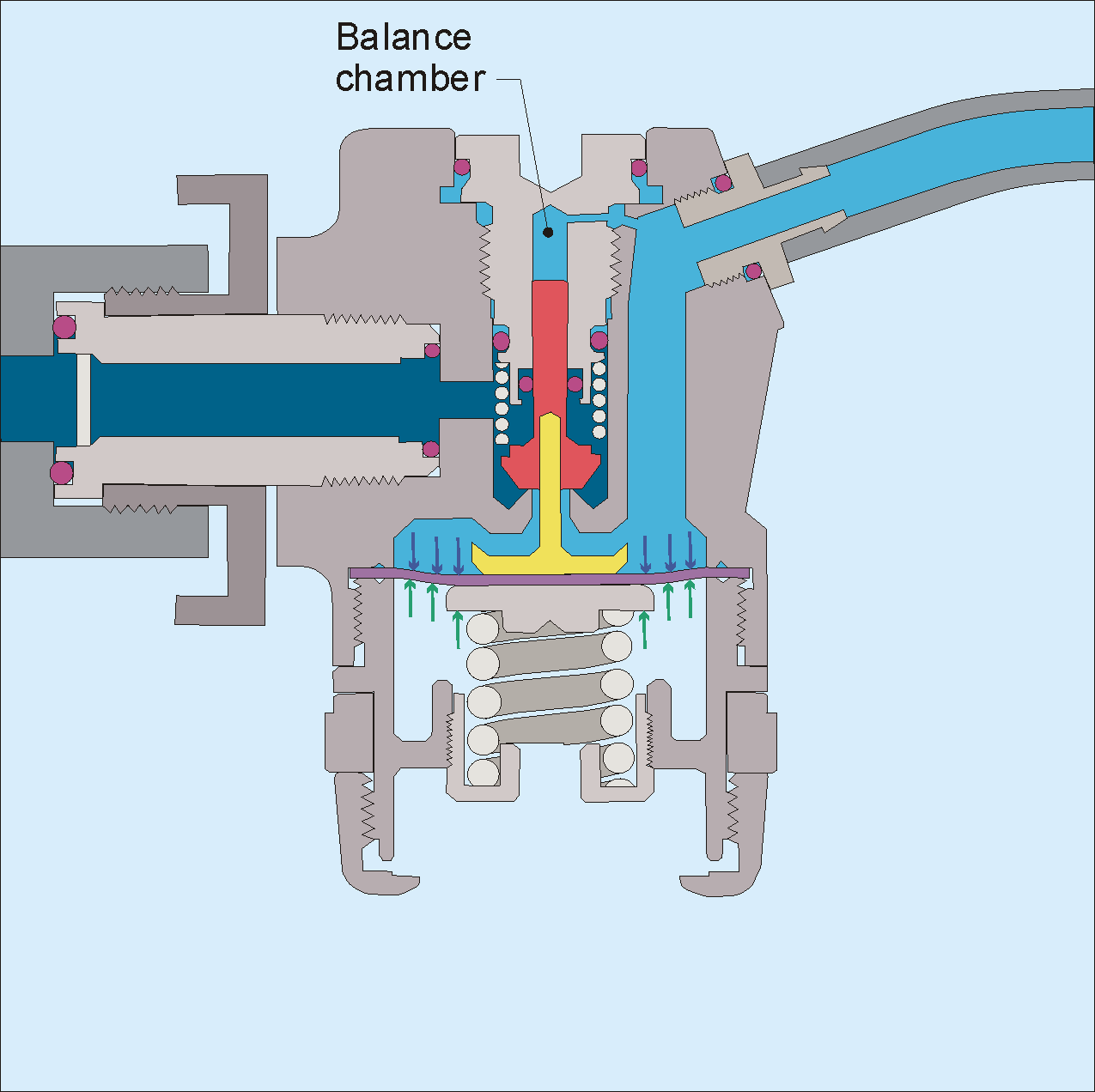
Components and basic concepts
- Inlet connection – DIN or INT/yoke, with the correct seal.
- Piston or diaphragm – controls valve opening according to the design pressure.
- Spring and chamber – part of the pressure-regulating mechanism.
- LP ports – intermediate pressure for breathing and the inflator.
- HP port – direct access to high pressure for measurement.
How does it work?
- High-pressure gas flows from the cylinder into the inlet valve.
- The regulating mechanism reduces pressure to a set value above ambient pressure.
- Changes in gas demand cause the valve to reopen or close.
Selection and proper use
- Choose a model approved for the specific gas, temperature and configuration.
- The swivel turret, port positions and hose routing affect ergonomics.
- For cold water, knowing the type alone is not enough: the model must be appropriately rated.
Pre-dive check
- Check the connection, thread and O-ring before attaching it.
- When opening the valve, watch for unwanted leakage and unusual sounds.
- Check the connections and hose routing with your buddy.
Common mistakes
- Mixing up HP and LP ports or using incompatible parts.
- Assuming that every diaphragm regulator is automatically safe for icy water.
- Adjusting the regulator independently without measurement and service procedures.
Maintenance and storage
- Protect the inlet from water and dirt according to the instructions.
- Have it serviced by a qualified technician using appropriate parts.
- Do not store the regulator with hoses under strain or twisted.
Instructor’s note: This diagram illustrates the function, not the component layout of a particular manufacturer; do not use it for an overhaul.
Further reading
For pre-dive checks and maintenance, see DAN – Gear Care Guidelines and DAN – Diving Equipment. The specific manufacturer’s instructions and training take precedence over this general overview.