

Deep ’n Blue Subotica · Education · Basic equipment
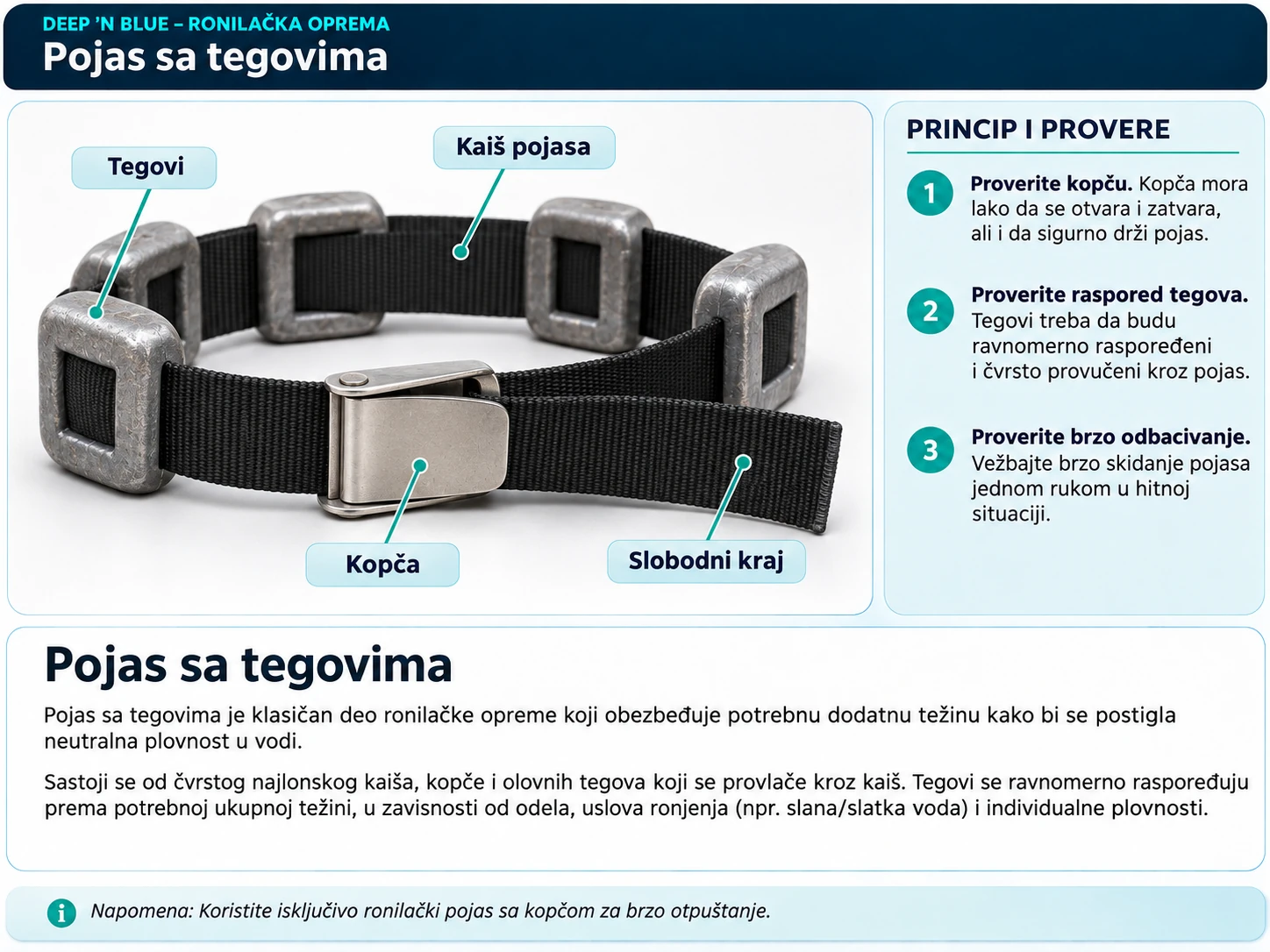
Weight belt, pockets, trim weights and proper weight distribution.
What is it and what is it used for?
Weights compensate for the positive buoyancy of the diver and equipment so that the diver can achieve neutral buoyancy with an adequate buoyancy reserve.
The exact weight and distribution depend on the cylinder, suit, water salinity and the amount of gas remaining at the end of the dive.
Components and basic concepts
- Lead weight belt or integrated weight pockets.
- Quick-release system, if provided.
- Trim pockets for weight distribution.
- Fixed weights in technical configurations, as planned.
- Load-bearing strap, buckles and retainers.
How does it work?
- Weights increase the total weight of the system.
- The correct amount enables buoyancy control with a reduced gas reserve.
- Vertical and lateral distribution affects body position in the water.
Selection and proper use
- Weighting is adjusted using an appropriate procedure under controlled conditions.
- Knowing which weights are ditchable and which are not is part of buddy planning.
- On the surface, always consider the consequences of releasing weights.
Pre-dive check
- Check the weight, position and security of the buckles.
- The buddy must know how to release the weights if a release mechanism is provided.
- Check that the pockets have not inadvertently been left incompletely locked.
Common mistakes
- Too much weight, requiring excessive BCD inflation.
- Uneven distribution that disrupts trim.
- Indiscriminate weight ditching without understanding the consequences.
Maintenance and storage
- Rinse the buckles and pockets.
- Monitor the edging, hook-and-loop fasteners and seams for damage.
- Store the system so that the lead does not damage other equipment.
Instructor’s note: In some technical configurations, ditching weights may be dangerous. The procedure must match the configuration in which the diver has been trained.
Further reading
For pre-dive checks and maintenance, see DAN – Gear Care Guidelines and DAN – Diving Equipment. The specific manufacturer’s instructions and training take precedence over this general overview.