

Deep ’n Blue Subotica · Education · Technical configuration
Side-mounted cylinders, bungee, lower clip, trim and passing through restrictions.
What is it and what is it used for?
Sidemount involves carrying one or more cylinders along the diver’s sides rather than on the back. The equipment is particularly adaptable to certain profiles, but requires precise adjustment and control of both independent breathing systems.
Cylinders may change buoyancy as gas is consumed. Valve position, upper bungee and lower attachment points are adjusted to the specific cylinders and configuration.
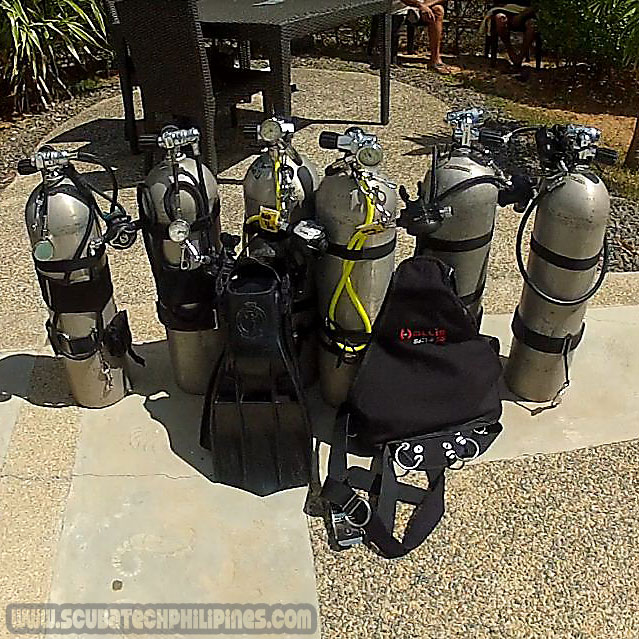
Components and basic concepts
- Left and right cylinders with separate regulators.
- Bungee system for controlling the upper part of the cylinders.
- Lower bolt snap or sliding attachment point.
- Sidemount harness and buoyancy bladder.
- SPGs and hoses, with an appropriate regulator-switching plan.
How does it work?
- The upper portions of the cylinders are stabilised by bungees.
- The lower ends are clipped so that the cylinders lie alongside the body.
- Changes in pressure and gas mass may require control of cylinder position.
Selection and proper use
- Steel and aluminium cylinders do not automatically require the same adjustments.
- Unclipping cylinders to pass a restriction requires buoyancy and load control and appropriate training.
- Two cylinders do not automatically provide a redundant reserve without a gas plan.
Pre-dive check
- Check bungees, bolt snaps, valves and mouthpieces.
- Check trim at starting and lower pressures in controlled water conditions.
- Check accessibility of both sides without strain or twisting hoses.
Common mistakes
- Letting a cylinder hang freely in front of you without control.
- Incorrect valve position behind the back.
- Poor planning of regulator sharing and switching.
Maintenance and storage
- Inspect bungees and straps for wear.
- Rinse clips and moving parts.
- Service regulators and valves according to the manufacturer’s instructions.
Instructor’s note: Passing through restrictions, unclipping cylinders and gas management require training with an instructor in a suitable environment.
Further reading
For pre-dive checks and maintenance, see DAN – Gear Care Guidelines and DAN – Diving Equipment. The specific manufacturer’s instructions and training take precedence over this general overview.