

Deep ’n Blue Subotica · Education · Instruments and navigation
Bearing, lubber line, bezel and navigation patterns.
What is it and what is it used for?
A compass helps maintain orientation when natural landmarks are insufficient. For accurate readings, hold the instrument in the appropriate position and away from large metal objects.
A compass does not indicate the exit point or solve the problem of currents; it is an aid used alongside the route plan and observation of the surroundings.
Components and basic concepts
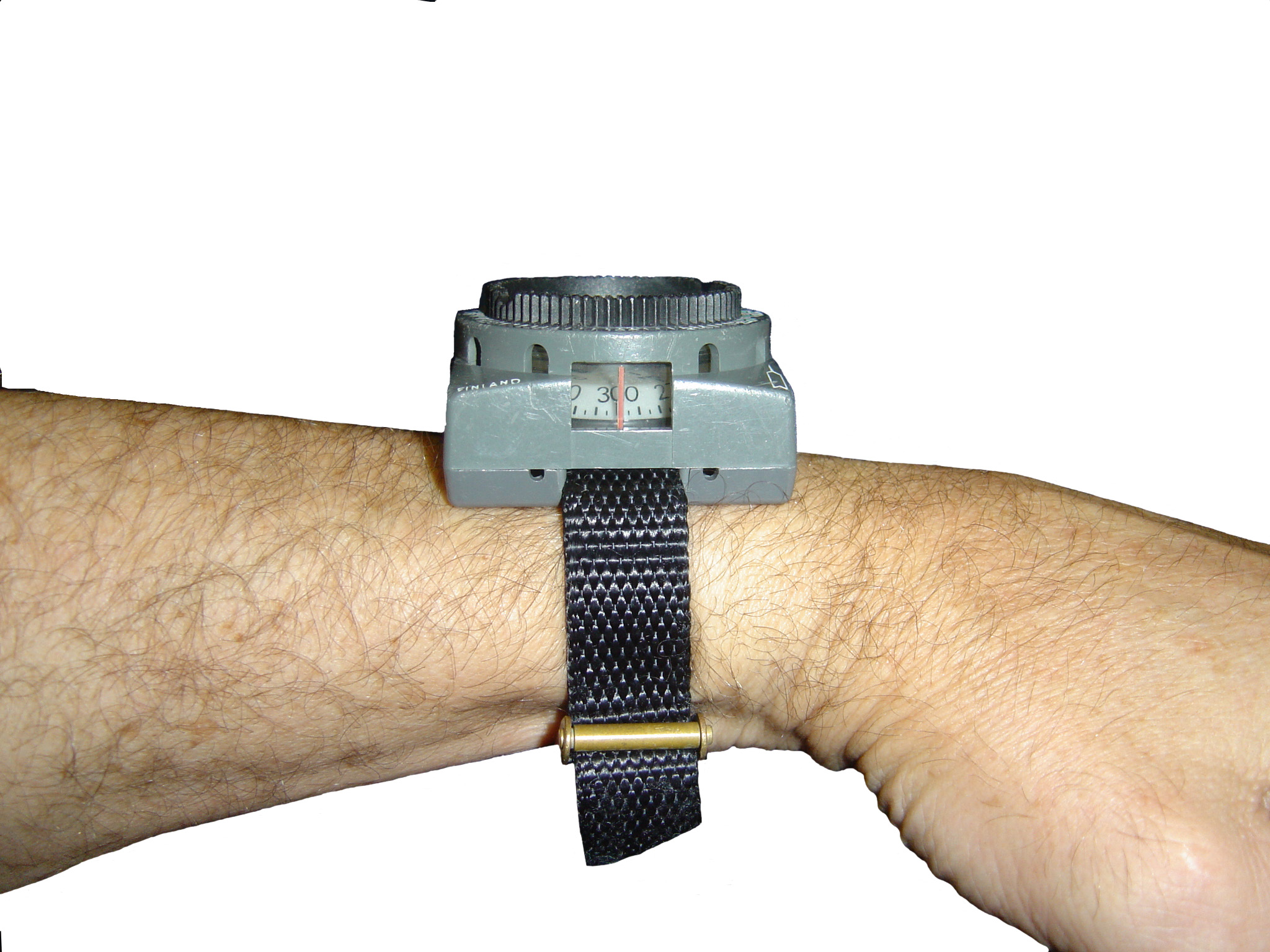
- Magnetic needle or compass card.
- Lubber line – the main line indicating the direction of travel.
- Rotating bezel – for retaining the selected direction.
- Bearing scale and reference course markings.
How does it work?
- The Earth’s magnetic field orients the needle or compass card.
- The diver aligns the body and course with the lubber line.
- The reciprocal direction is determined according to the compass course and procedure.
Selection and proper use
- Use the compass together with time measurement and distance estimation.
- Agree on the outbound and return directions before diving.
- Practise navigation in good visibility before navigating in poor visibility.
Pre-dive check
- Check that the instrument is not stuck.
- Check the legibility of the markings and the attachment.
- Keep it away from magnetic sources whenever possible.
Common mistakes
- Holding the compass at an angle beyond the permitted tilt tolerance.
- Following a bearing without accounting for currents.
- Confusing the selected direction with north.
Maintenance and storage
- Rinse and protect against impacts.
- Check the strap or mounting regularly.
- Do not leave the instrument near strong magnets.
Instructor’s note: A compass is no substitute for a safe exit plan, agreed turnaround points and buddy navigation.
Further reading
For pre-dive checks and maintenance, see DAN – Gear Care Guidelines and DAN – Diving Equipment. The specific manufacturer’s instructions and training take precedence over this general overview.