

Deep ’n Blue Subotica · Education · Lines and signalling
Primary and backup lights, beam, runtime and reliability.
What is it and what is it used for?
A dive light illuminates the surroundings, allows instruments to be read and enables agreed visual communication. In an overhead environment the lighting system is part of a dedicated redundancy plan.
The stated runtime and beam range do not mean that the device will perform identically in cold and turbid water.
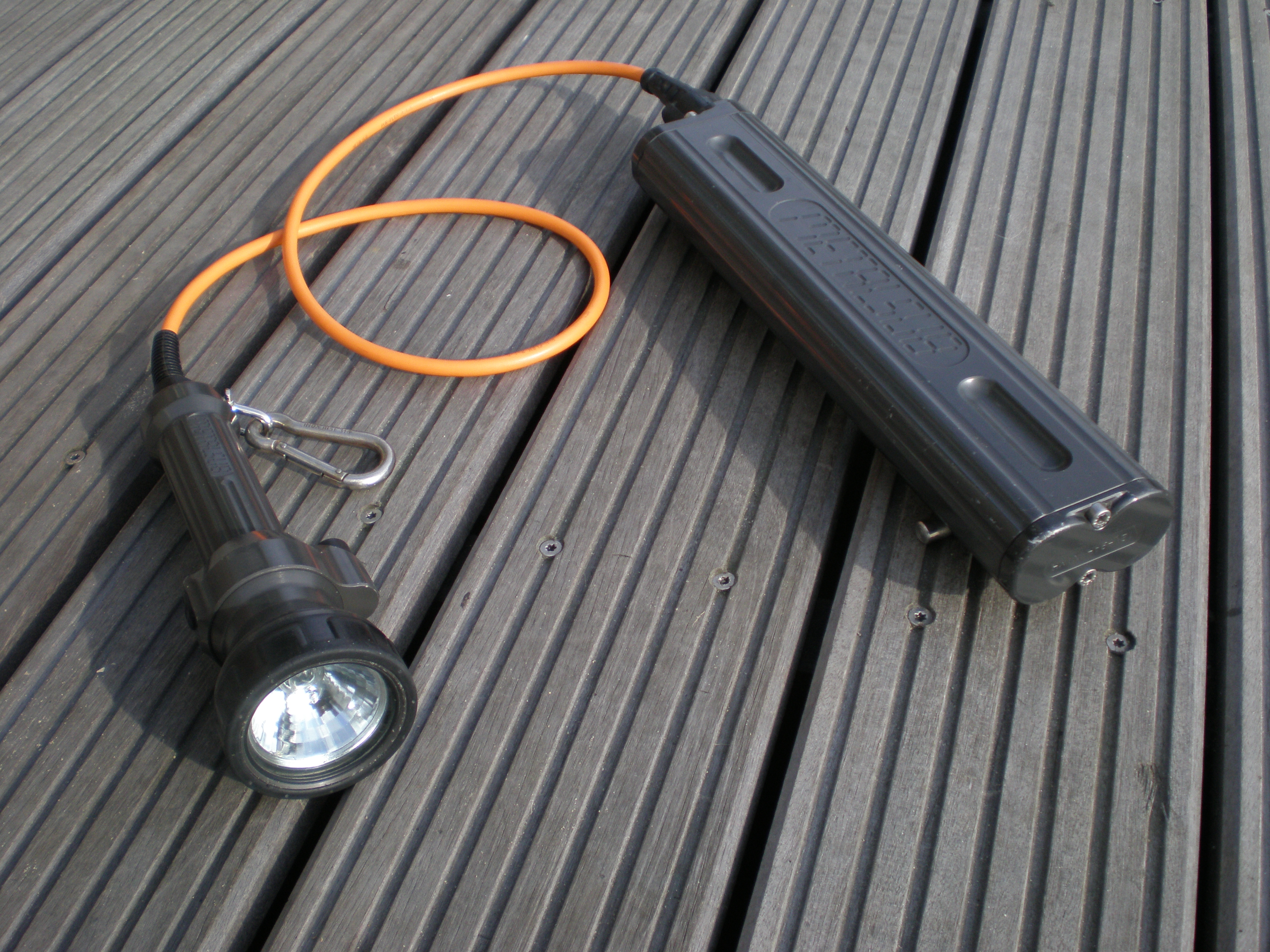
Components and basic concepts
- Light source and optics.
- Housing and seals rated for the intended depth.
- Battery and electronic control.
- Switch and locking mechanism.
- Cord, bolt snap or other secure attachment.
How does it work?
- The power supply enables the light source to operate.
- The optics direct the beam at the selected angle.
- The device consumes energy and may dim or switch off.
Selection and proper use
- In turbid water an excessively bright, wide beam may illuminate particles in front of the face.
- Plan runtime with a reserve and account for temperature.
- Agree on signalling procedures with your buddy before diving.
Pre-dive check
- Check the battery, seals, switch and attachment.
- Check that every backup light works.
- Record the runtime confirmed under actual conditions.
Common mistakes
- Relying entirely on a single light in an overhead environment.
- Charging with an unsuitable charger.
- Ignoring a damp or damaged seal.
Maintenance and storage
- Wash and dry the exterior according to the instructions.
- Inspect the O-ring and clean its seating surface as recommended.
- Store and charge batteries according to the manufacturer’s instructions.
Instructor’s note: Cave diving requires a redundant lighting plan and training; the number and purpose of lights depend on the standards and profile.
Further reading
For pre-dive checks and maintenance, see DAN – Gear Care Guidelines and DAN – Diving Equipment. The specific manufacturer’s instructions and training take precedence over this general overview.