


Deep ’n Blue Subotica · Education · Breathing and gas
Steel and aluminum, capacity, pressure, markings, inspection and filling.
What is it and what is it used for?
A scuba cylinder is a high-pressure vessel for breathing gas. The capacity marked in liters represents its internal water capacity, while the working pressure represents the permitted design value according to the markings and applicable rules.
Multiplying capacity by pressure gives only a rough estimate of the amount of gas at moderate pressures; an accurate estimate requires consideration of temperature, real gas behavior and a reserve plan.
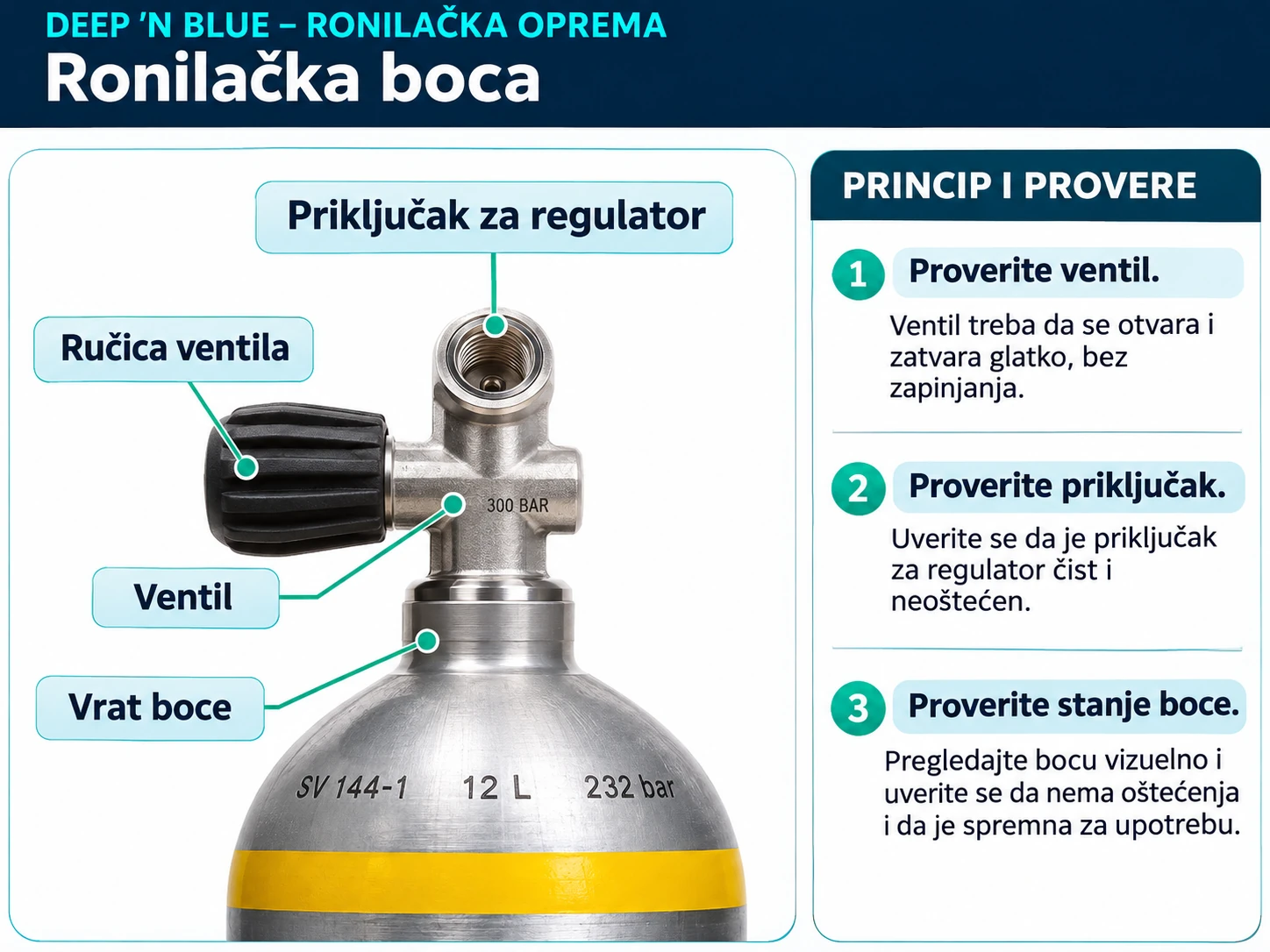
Components and basic concepts
- Cylinder body – a vessel with permanent markings.
- Neck and thread – connection to the specified type of valve.
- Base or boot – protection/support depending on the design.
- Valve – opens and closes the gas supply in a controlled manner.
- Markings – capacity, working pressure, serial number and tests.
How does it work?
- Gas is stored under pressure in a sealed cylinder.
- When the valve is opened, gas reaches the first stage of the regulator.
- Cylinder pressure decreases as gas is consumed; buoyancy behavior depends on the material and remaining gas.
Selection and proper use
- Choosing 10, 12 or 15 L does not replace gas planning or the reserve rule.
- Consider weight, neutral buoyancy/aluminum, size and attachment method.
- For nitrox and other mixtures, check compatibility and labeling.
Pre-dive check
- Check that inspection dates and markings are valid.
- Inspect the cylinder body, valve and thread, and look for obvious damage.
- During transport, secure the cylinder against tipping and impacts.
Common mistakes
- Filling beyond the rated working pressure.
- Continuing to use a damaged cylinder or one with an expired inspection.
- Relying on bar readings as the only measure of remaining time.
Maintenance and storage
- Fill only at a suitable filling station with gas quality control.
- Inspections and tests according to applicable local regulations and manufacturer requirements.
- Store the cylinder securely according to the manufacturer’s recommendations.
Further reading
For pre-dive checks and maintenance, see DAN – Gear Care Guidelines and DAN – Diving Equipment. The specific manufacturer’s instructions and training take precedence over this general overview.