
Deep ’n Blue Subotica · Education · Freediving and spearfishing
Freediving mask requiring less air for equalisation
What is it and what is it used for?
Freediving masks often have low internal volume, soft silicone and a compact profile. A good seal and easy access to the nose are more important than design.
Freediving and spearfishing involve particular risks. Plan activities with a trained buddy, and spearfish only where it is permitted.
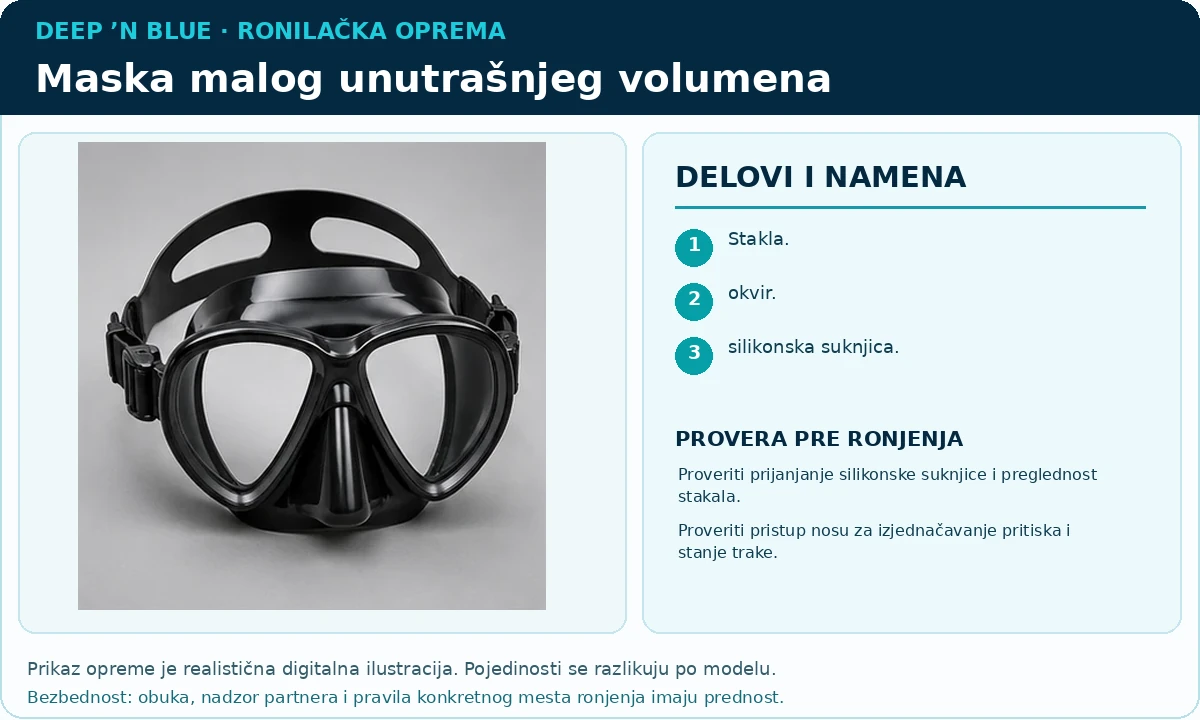
Components and basic concepts
- Lenses.
- Frame.
- Silicone skirt.
- Nose pocket.
- Strap and buckles.
How does it work?
- A smaller volume requires less air to equalise pressure inside the mask during descent.
Selection and proper use
- Check the seal and comfort before entering the water; never substitute tightening the strap for equalisation.
- Choose equipment according to training objectives, site conditions and the manufacturer’s instructions.
Pre-dive check
- Check the fit of the silicone skirt and clarity of the lenses.
- Check access to the nose for equalisation and the condition of the strap.
Common mistakes
- Unsuitable equipment and excessive loading can increase risk.
- Misjudging personal limits and the absence of a buddy can lead to loss of consciousness and drowning.
Maintenance and storage
- Rinse, dry and inspect according to the manufacturer’s instructions.
- Do not use damaged equipment; store it safely, particularly sharp items.
Instructor’s note: Never practise freediving alone or with hyperventilation. Specialised equipment and spearfishing require training, supervision, checking local regulations and a responsible attitude towards nature.
Further reading
For pre-dive checks and maintenance, see DAN – Gear Care Guidelines and DAN – Diving Equipment. The specific manufacturer’s instructions and training take precedence over this general overview.