

Deep ’n Blue Subotica · Education · Lines and signalling
Surface signalling and line handling in the water.
What is it and what is it used for?
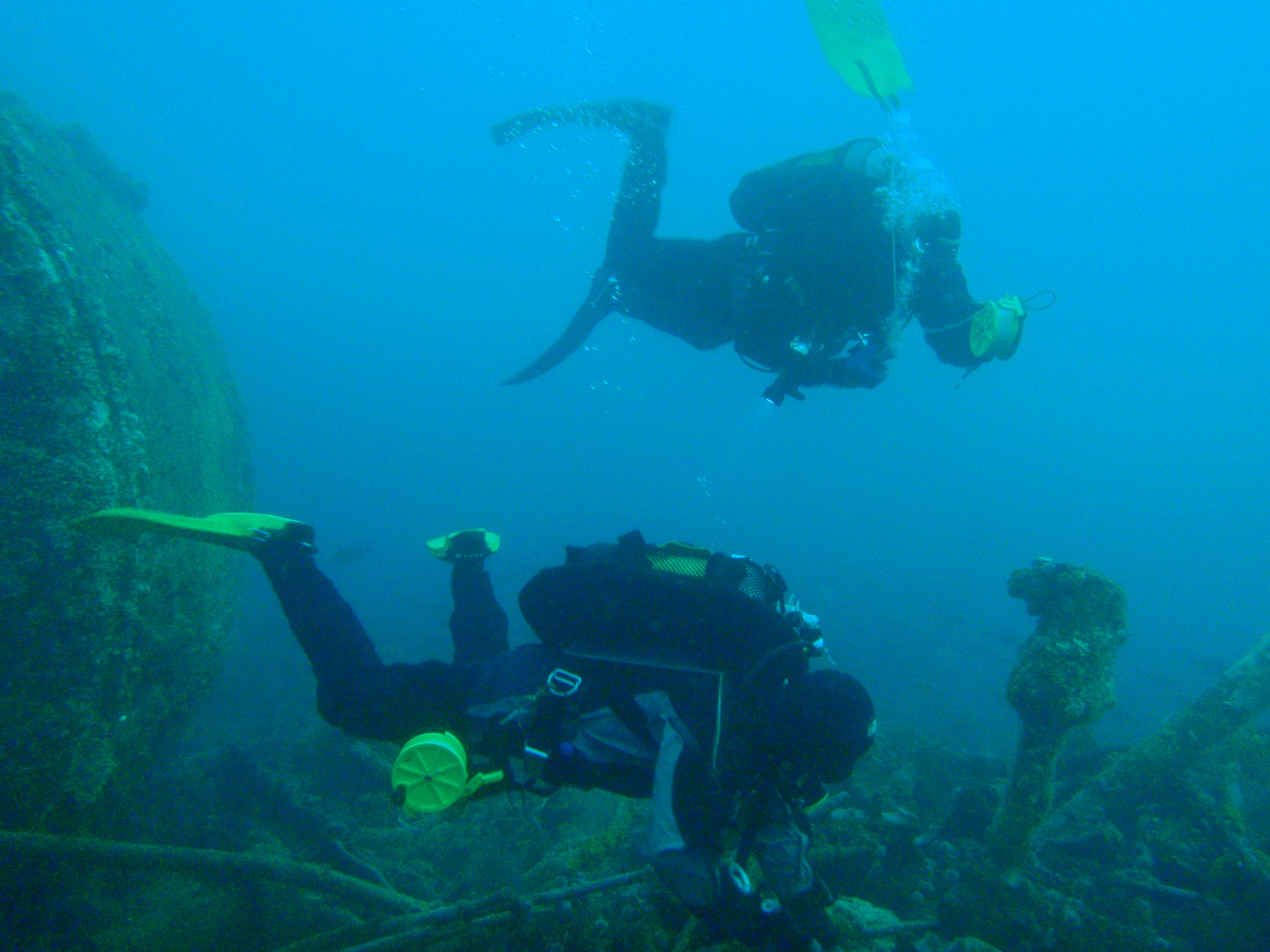
A DSMB (Delayed Surface Marker Buoy) is a marker float that can be deployed towards the surface from underwater so that others at the surface can see the diver’s approximate position. It is for communication and visibility, not depth control.
Colours, shapes and signal meanings differ according to local agreements and procedures; their meaning should be agreed before the dive.
Components and basic concepts
- Tubular or other clearly visible buoy chamber.
- Gas inlet – open or a dedicated inflation system.
- Safety valve, if fitted.
- Attachment loop for the line and spool or reel.
How does it work?
- Controlled introduction of gas gives the buoy positive buoyancy.
- The line unwinds as the buoy rises towards the surface.
- At the surface, its height above the water makes it easier to spot.
Selection and proper use
- Do not rely on a single signal in demanding conditions.
- Release and deployment are performed while maintaining buoyancy control.
- Water currents and boat traffic affect its position and usefulness.
Pre-dive check
- Check the chamber for leaks and proper sealing.
- Check the line, attachment points and spool.
- Check that the buoy is accessible without removing essential equipment.
Common mistakes
- Tying the line firmly to the diver.
- The spool jamming while the buoy accelerates.
- An underinflated buoy that remains horizontal.
Maintenance and storage
- Rinse and dry completely.
- Inspect the seams, valve and attachment loops.
- Store in a pouch without keeping the valve assembly folded.
Instructor’s note: Unintentional pulling of the diver towards the surface is a serious risk. Practise with an instructor in controlled water conditions.
Further reading
For pre-dive checks and maintenance, see DAN – Gear Care Guidelines and DAN – Diving Equipment. The specific manufacturer’s instructions and training take precedence over this general overview.