


Deep ’n Blue Subotica · Education · Technical configuration
Backplate, harness, D-rings and rear-mounted air bladder.
What is it and what is it used for?
A backplate/wing configuration uses a rigid plate, harness and separate air bladder behind the diver. It can carry a single cylinder or doubles, depending on the intended configuration and equipment.
These systems are modular, but incorrect positioning of rings, straps and attachments can make handling underwater difficult.
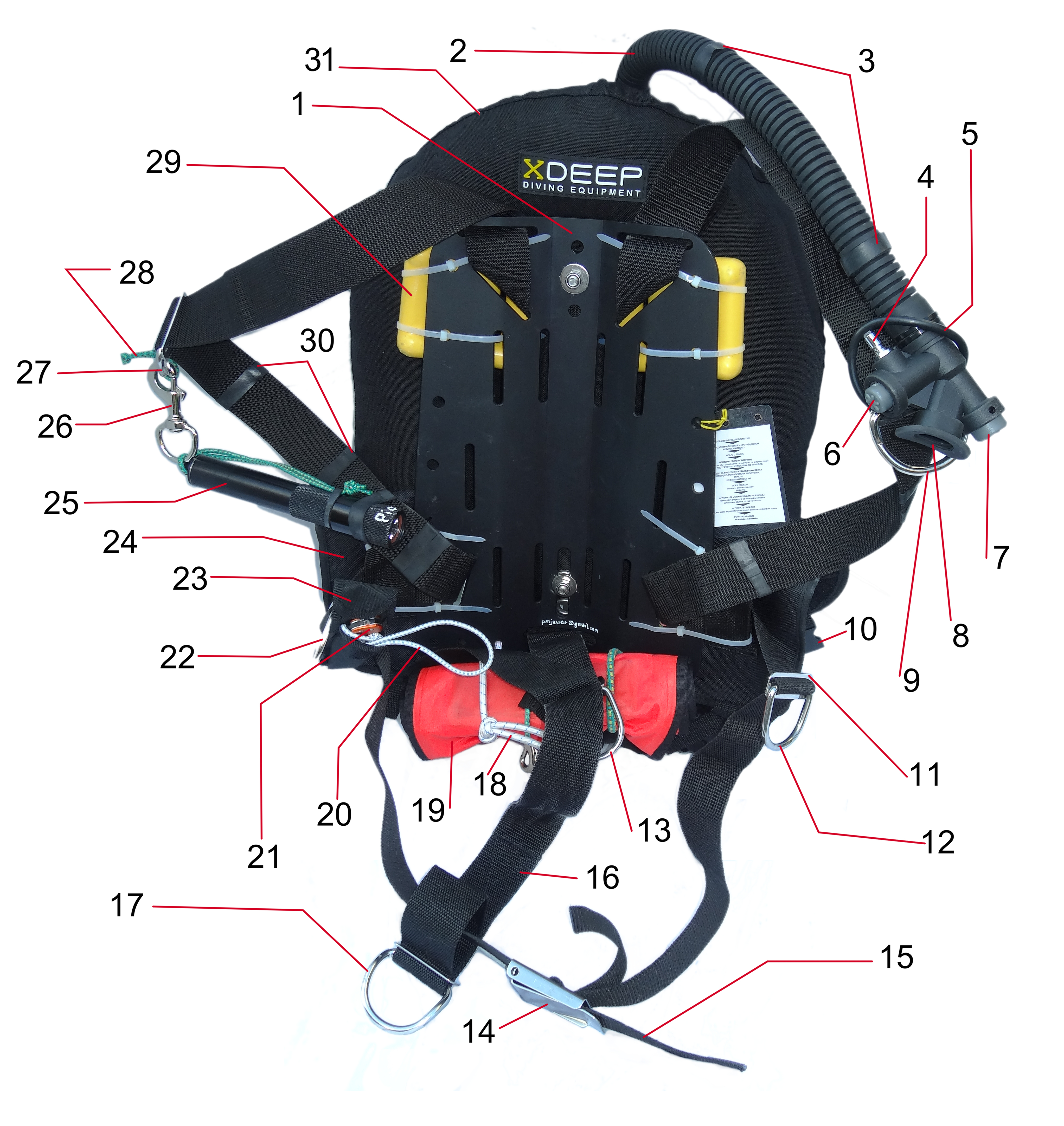
Components and basic concepts
- Backplate – a load-bearing steel or aluminium plate.
- Wing – a suitable air bladder.
- Harness – shoulder straps, waist belt and crotch strap.
- D-rings – designated attachment points.
- Adapter or bands – cylinder securing system.
How does it work?
- The plate transfers the weight of the cylinder to the body through the harness.
- The wing changes buoyancy at the rear of the system.
- D-rings allow a standardised arrangement of accessories.
Selection and proper use
- A single-cylinder configuration is not automatically the same as one for a twinset.
- Practise using the D-ring positions in the equipment you actually dive with.
- Neither an undersized nor an oversized wing is a good choice.
Pre-dive check
- Check the assembly of the cylinder, backplate and wing.
- Check the inflator, valves, straps and waist buckle.
- Check all attachment points in the water.
Common mistakes
- Incorrectly threaded straps and slipping D-rings.
- A harness so loose that it allows the assembly to move.
- Insufficient understanding of air bladder positioning during ascent.
Maintenance and storage
- Rinse and dry metal parts, fabric and wing.
- Inspect straps for abrasion points.
- Check the tightness and compatibility of attachments.
Instructor’s note: The diagram shows a typical arrangement, not universal D-ring measurements. Adjustment requires checking in the water.
Further reading
For pre-dive checks and maintenance, see DAN – Gear Care Guidelines and DAN – Diving Equipment. The specific manufacturer’s instructions and training take precedence over this general overview.