

Deep ’n Blue Subotica · Education · Instruments and navigation
O₂ sensor, calibration, readings and documentation of the mixture.
What is it and what is it used for?
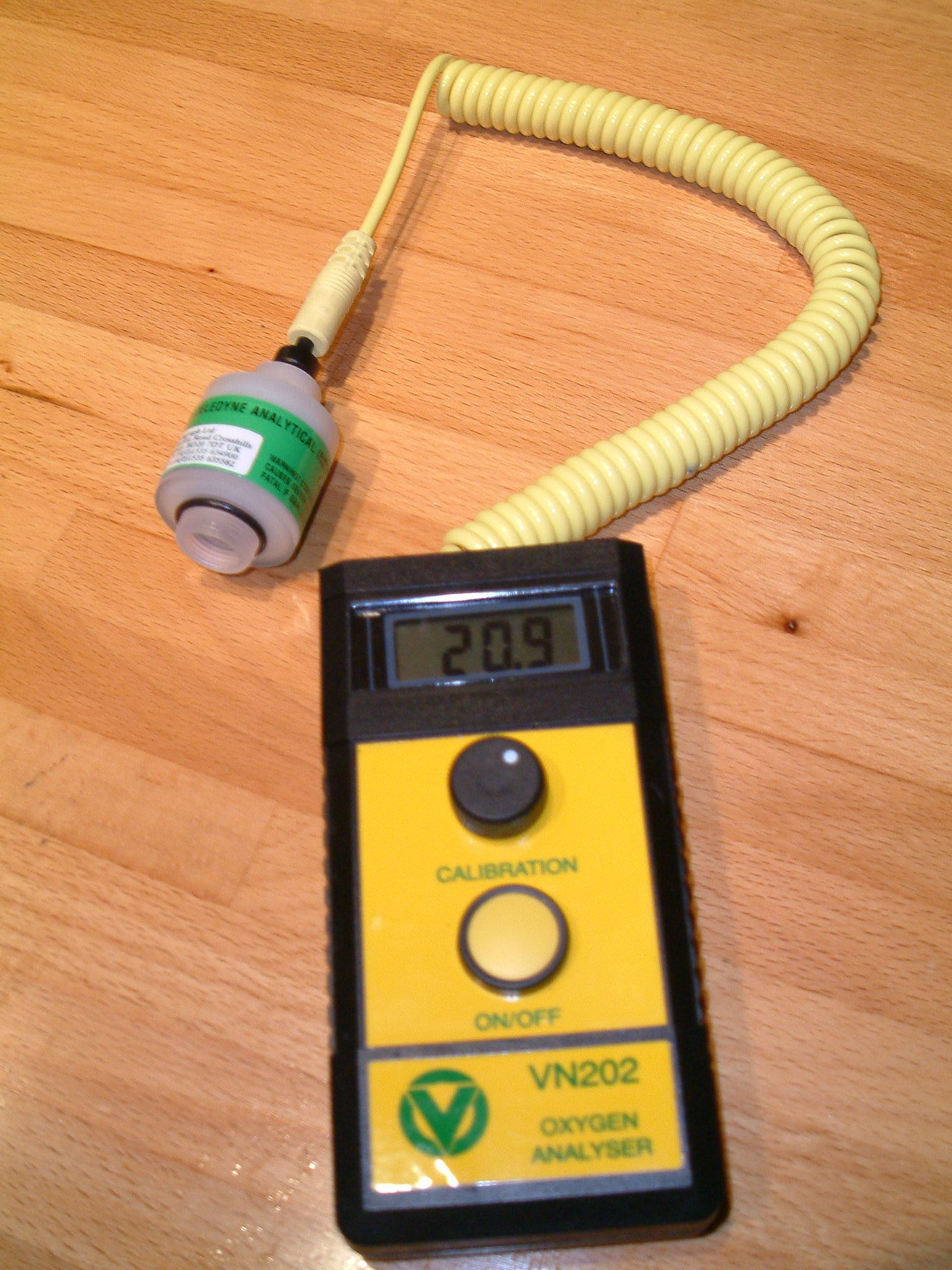
An oxygen analyzer measures the oxygen fraction in a breathing gas mixture using a suitable sensor and electronics. Checking the mixture before diving is essential for planning the permitted profile and matching the correct cylinder to the plan.
Accuracy depends on calibration, sensor condition, flow conditions and the manufacturer’s procedure.
Components and basic concepts
- Oxygen sensor – responds to the partial pressure of O₂.
- Display – shows the percentage or another value.
- Calibration procedure – establishes the reference point.
- Adapter and flow control – provide a suitable gas sample.
- Cylinder marking and analysis record.
How does it work?
- The gas sample reaches the sensor at an appropriate flow rate.
- The sensor and electronics provide a measurement based on calibration.
- The result is associated with the specific cylinder and the dive plan.
Selection and proper use
- Use only the manual and training applicable to the particular type of analyzer.
- Do not copy the percentage from the label without your own check where the procedure requires one.
- The result must be linked to the cylinder’s identity.
Pre-dive check
- Check the sensor condition, battery and calibration.
- Check reading stability using the prescribed procedure.
- Check that the cylinder marking matches the analysis.
Common mistakes
- Incorrect calibration or excessive flow.
- Confusing the identities of two cylinders.
- Entering the wrong percentage into the dive computer.
Maintenance and storage
- Store the sensor according to the instructions.
- Replace the consumable sensor when specified.
- Keep the inlet clean and free of unsuitable lubricants.
Instructor’s note: An incorrect analysis may lead to oxygen toxicity or decompression errors. The procedure is performed by a trained person.
Further reading
For pre-dive checks and maintenance, see DAN – Gear Care Guidelines and DAN – Diving Equipment. The specific manufacturer’s instructions and training take precedence over this general overview.